Season & Events
Istanbul during Ramadan — what to expect and where to go
A practical guide to visiting Istanbul during Ramadan — iftar spots, the Sultanahmet atmosphere, what changes, and what stays the same.
Ramadan in Istanbul is one of the city's most atmospheric times to visit — if you know what to expect. The city doesn't shut down; it transforms. Here's what actually changes and what the experience is like from a neighbourhood like Şişli.
What changes during Ramadan
Restaurants: Many restaurants remain open during the day for non-fasting visitors, especially in tourist areas and in neighbourhoods like Şişli and Bomonti. In purely residential streets, some smaller lokanta (casual eateries) may close until iftar.
The pace: The city moves differently in the hours before iftar (sunset). Traffic thins out as people return home. Supermarkets are busy. There's an anticipation in the air.
Iftar itself: The moment the call to prayer sounds at sunset, the city sits down to eat. Parks fill with families. Mosques open their courtyards for free communal iftar meals. Sultanahmet Square becomes a festival.
Sahur: If you're a light sleeper, note that drummers (davulcu) walk through residential neighbourhoods in the early morning hours (around 03:00–04:00) to wake people for the pre-dawn meal. It's part of the tradition; earplugs solve it.
Where to experience iftar
Sultanahmet Square
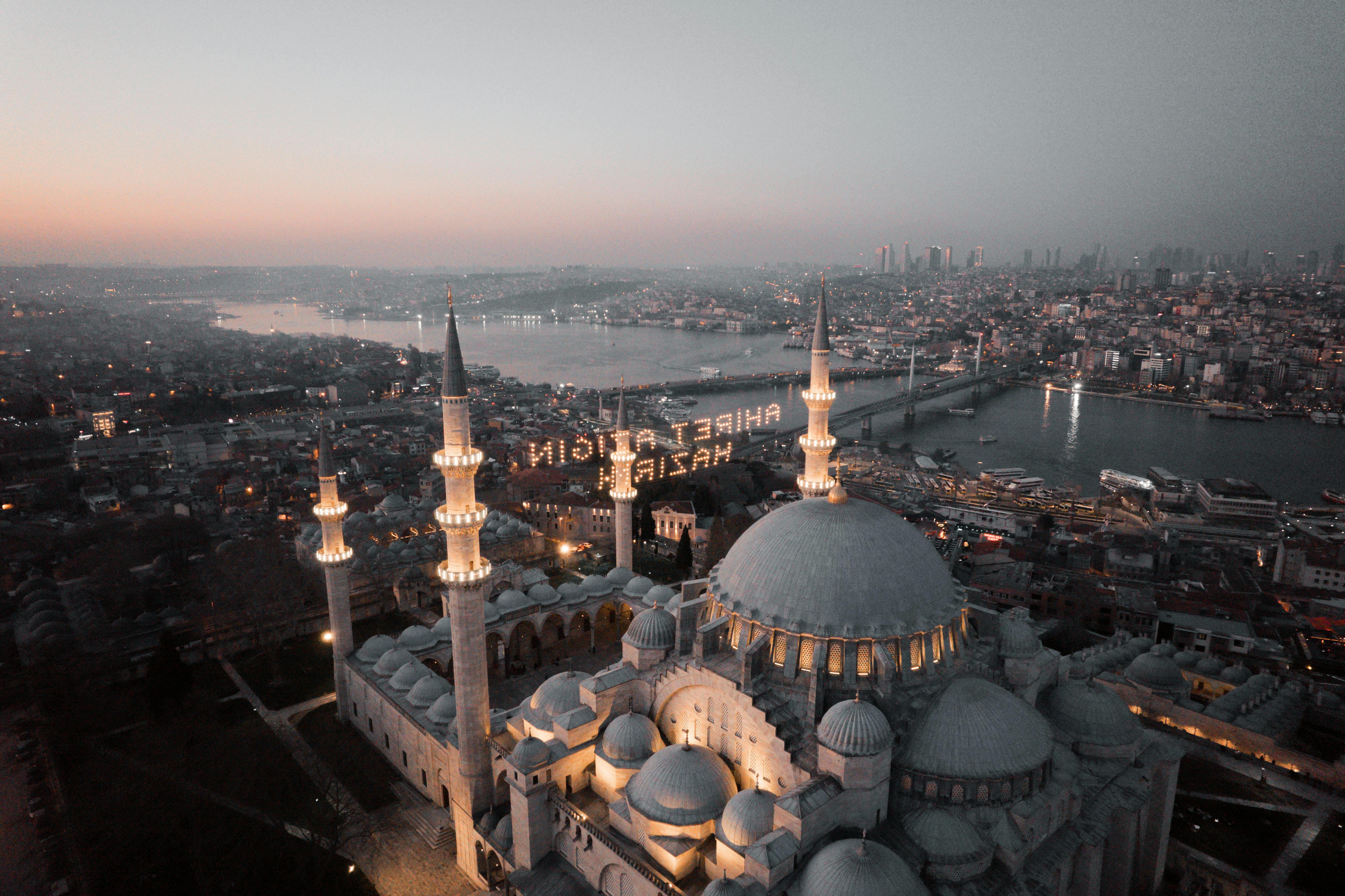
The big experience. Tables are set up in the square and the surrounding streets; families, tourists, and locals all sit together. The Blue Mosque is illuminated with special Ramadan mahya (light decorations strung between the minarets). Go before sunset, find a spot, and wait.
Fatih neighbourhood
More local, less touristy. The neighbourhood around Fatih Mosque has a genuine community iftar every evening — long tables, free food, everyone welcome. Thirty minutes from Şişli by metro.
Your own apartment
One of the pleasures of staying in a serviced apartment during Ramadan is the iftar table you can set at home. Turkish supermarkets in the weeks before Ramadan are stocked with extraordinary seasonal produce: dates from every origin, pide bread baked fresh each day, special soups and sweets. Buy ingredients at the Şişli market and cook — or order from one of the neighbourhood restaurants that offer iftar sets to go.
Food and drink
Alcohol service continues normally in restaurants and bars during Ramadan. Istanbul is a secular city; you'll encounter no restrictions as a non-fasting visitor.
The special Ramadan foods are worth seeking out:
Ramazan pidesi: A special flatbread baked only during Ramadan, sesame-topped and softer than regular bread. Long queues form at the bakery (fırın) in the hour before iftar.
Güllaç: A delicate milk dessert made with thin wafers, rosewater, and pomegranate. Found only in Ramadan.
Iftar sets: Most restaurants near mosques offer fixed iftar menus — soup, bread, main, dessert — for a set price. Good value.
Practical notes
- Dates: Ramadan dates shift each year (lunar calendar). For 2026, expect late February to late March.
- Noise: The evening hours during Ramadan are lively. If you prefer quiet, Şişli is calmer than Sultanahmet or Fatih.
- Respect: During daylight hours, eating and drinking in front of fasting people in traditional neighbourhoods is considered impolite. In tourist areas and modern parts of Şişli, no issue.
- Photography: Iftar gatherings are generally welcoming of photography. Ask before photographing individuals.
Ramadan is one of our favourite times of year in Istanbul. The city feels alive in a different way — more communal, more generous, more present.